By Clara Mendez
The first time you stand on deck and watch the horizon curve away, something shifts inside you.
The noise of the world quiets. The pulse of the engine slows to match your own. Wind becomes language.
This, perhaps, is the moment when the sea stops being scenery and becomes something deeper — a mirror large enough to hold your life.
The Call of Distance
Every voyage begins with a question: what lies beyond?
For Desmond Nicholson it was curiosity, not commerce, that pushed his schooner Mollihawk from Devon toward the Caribbean. For others, it’s the promise of silence, or discovery, or simply the need to move.
Captain Aisha Grant, who has crossed the Atlantic eight times, says she still feels the same pull each departure.
“You leave the dock and the land falls away like a thought you’ve finished having. Then it’s only horizon — pure possibility.”
At sea, distance isn’t separation; it’s invitation.
Freedom Measured in Miles
Freedom on land is abstract. At sea, it’s measured in knots and clouds.
Each sunrise is a decision — change course, chase weather, follow instinct. There are no traffic lights, no boundaries but depth.
On the 58-metre Seraphine, guests often ask Grant what it feels like to command something so vast. She always answers the same way:
“It doesn’t feel like control. It feels like partnership. The ocean lets us pass — never the other way around.”
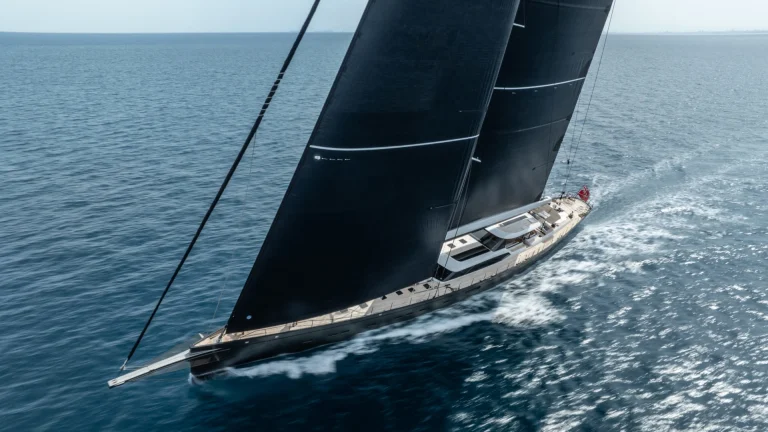
Even the most advanced instruments, the most carbon-perfect sails, are humble before that truth.
Where Time Slows Down
Life aboard a yacht unfolds in a rhythm the shore forgot. Morning begins not with screens but with light spilling through a porthole; evenings end when stars outnumber words.
The chef cooks to the cadence of waves; the steward lays the table as the horizon tilts.
Guests arrive tense, watchful, timed to their phones. Two days later, they move differently — slower, grounded, their conversations stretched like the tide.
“You see them change,” says Grant. “The sea resets people. It gives them back their own silence.”
The Fellowship of Water
To sail is also to join a tribe without borders — a quiet fellowship bound by tide and trust.
In every harbour you meet its members: a French engineer in Tahiti adjusting solar rigs; a Swedish family crossing the Med with children as crew; an Antiguan deckhand whistling Bob Marley as he coils lines in the heat.
No one asks where you came from, only where the wind took you last.
The dock talk flows in a shared grammar of currents, ports, and kindness. You borrow a wrench, you share a story, you part as friends.
It’s a reminder that the sea erases differences the way it erases footprints in sand.
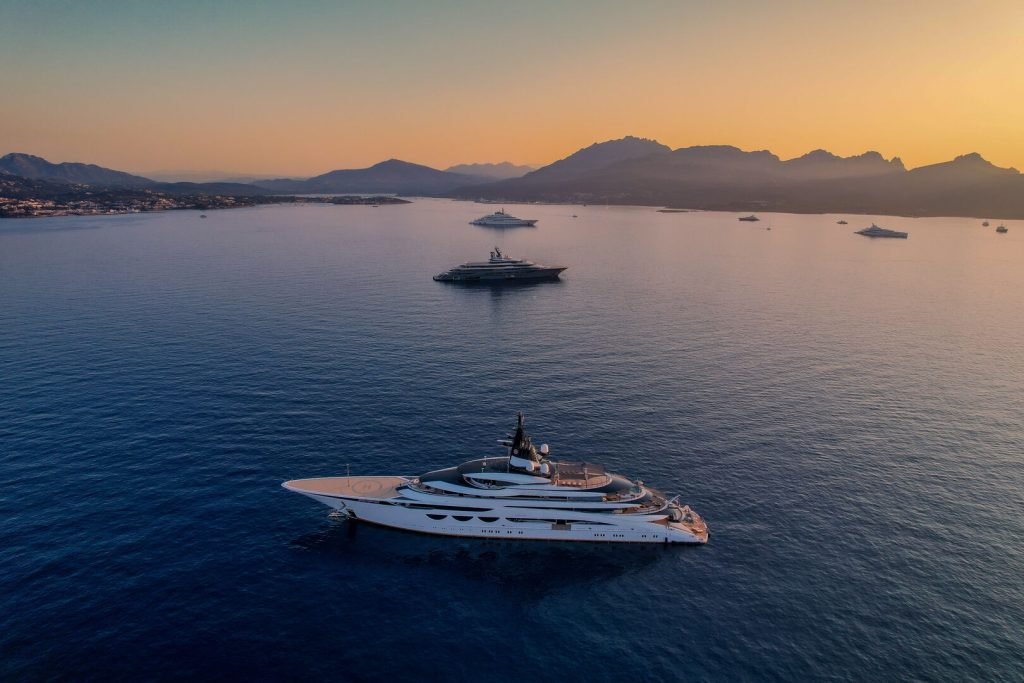
The Edge of Awe
Even after years afloat, the ocean still surprises.
A whale breach at sunrise; dolphins tracing the bow; a storm that paints lightning across the clouds like handwriting.
There are nights when bioluminescence turns the wake into a river of stars, and mornings when fog hides the world until the sun sketches it back into being.
Photographer Luc Armand calls these “moments of scale.”
“You realise how small you are — and how enormous your senses become.”
That humility is the sea’s greatest gift. It teaches reverence disguised as adventure.
Sailing as Reflection
Modern yachts are temples of design — hybrid engines, silent hulls, glass that tints with thought. Yet their purpose is ancient: to carry us into the unknown so we can return knowing ourselves.
Psychologist and sailor Dr Maya Holt studies the restorative effects of open water.
“Out there, the horizon becomes a meditation point,” she says. “It expands your sense of time. The brain slows, the heart synchronises with motion. It’s not escape; it’s reconnection.”
That’s why people keep coming back — not to flee life, but to feel it more completely.
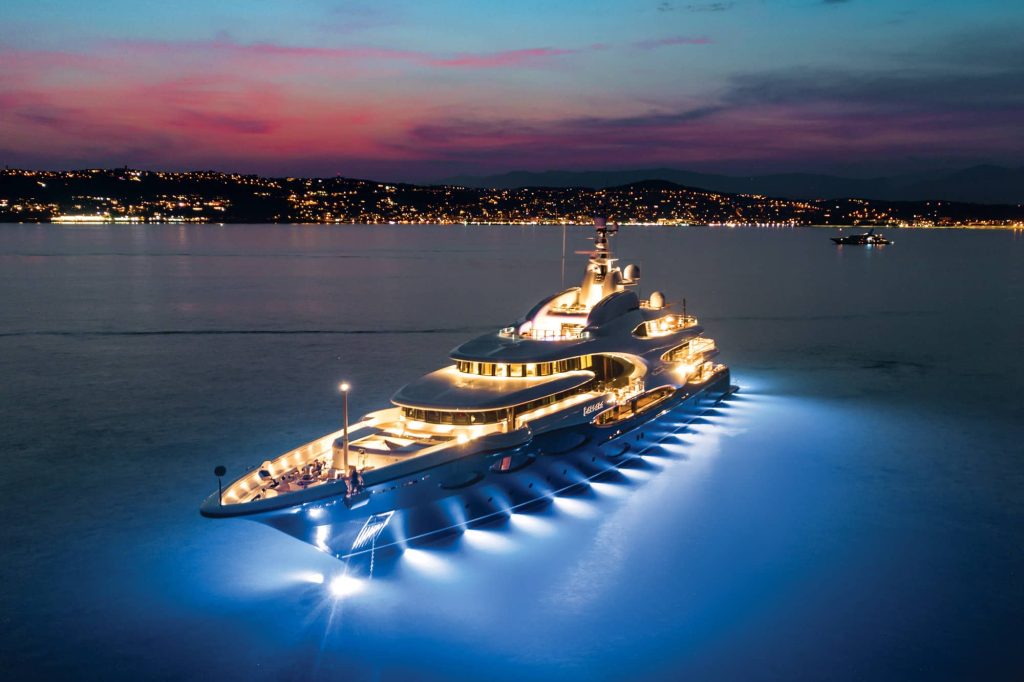
The Homecoming
Eventually, every voyage curves back toward land. The skyline appears, engines hum, and civilisation reclaims its noise.
But the sea lingers. You feel it in the way you breathe, in the patience you carry home.
On the dock, Captain Grant watches her guests step ashore. Some cry, some promise to return, all look changed.
“Leaving the sea is like waking from a dream,” she says. “You remember parts of it forever.”
The yacht quiets again — ropes creaking, flags soft in the dusk — waiting for the next question, the next horizon.
Why We Sail
We sail because the world is vast and we are curious.
Because the horizon is both a destination and mirror.
Because movement, when done with grace, feels like prayer.
And perhaps because somewhere deep within us, the sea is already home — the cradle of our beginnings, the echo of our pulse.
In every voyage, from Nicholson’s Mollihawk to today’s silent hybrids, the story is the same: the ocean calls, we answer, and for a little while the world makes perfect sense.