By Marcus Ellery
The wind arrives without fanfare — a soft ripple over the bay, a whisper across the rigging.
For centuries, sailors have listened for this sound, reading it in the water, the sky, the shiver of canvas.
Today, the same intuition guides men and women surrounded not by salt and rope alone, but by code, carbon, and computer screens.
Yet the goal remains unchanged: to turn air into motion and motion into freedom.
From Canvas to Carbon
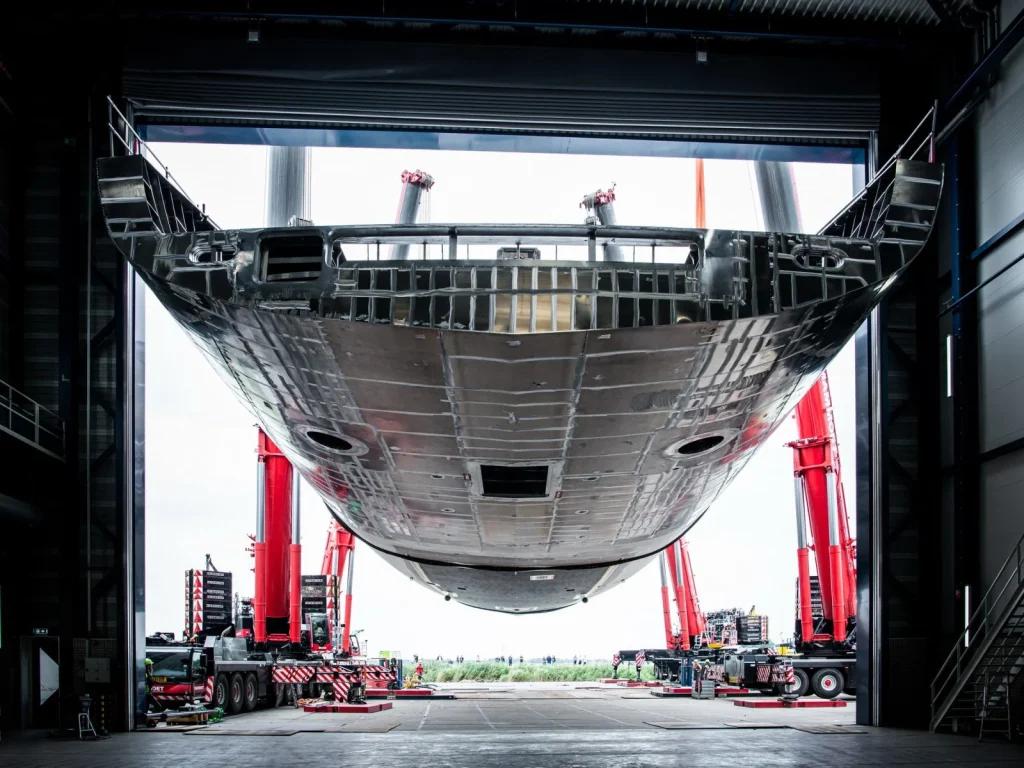
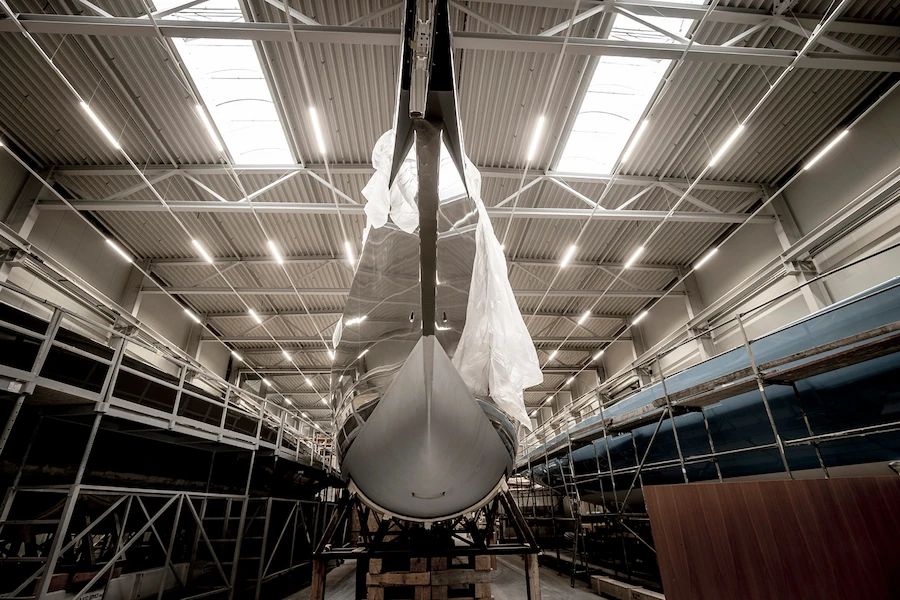
At Royal Huisman’s yard in Vollenhove, a new 80-metre sloop rests beneath the cathedral-like scaffolding of the build hall. The hull gleams silver-grey, a composition of carbon fibre, titanium, and dream.
Naval architect Gérard Dijkstra runs a hand along the curve. “You can calculate performance to the decimal,” he says, “but the boat still has to feel right. That hasn’t changed since the age of oak and tar.”
In the design loft above, teams test sails in virtual wind tunnels. Algorithms predict heel angles, mast compression, even the exact second a spinnaker will fill.
“Computers give us clarity,” says design engineer Annelies van Riet, “but intuition gives us soul. We model the sea — then trust our guts.”
A Tradition That Refuses to Die
Sailing remains, at its heart, an act of humility.
Long before GPS, the Nicholson family read the horizon by eye and sextant, tracing invisible lines across the Atlantic. Today’s captains navigate with satellites and augmented-reality overlays, yet when you stand at the helm, it’s still you, the vessel, and the wind.
Captain Tom Bisset, who commands the 55-metre sloop Eos II, describes it as a conversation.
“The wind speaks in pressure,” he says. “You respond in trim. Every correction is like a line of dialogue.”
When the boat finds its balance, time dissolves. The instruments flatten to zero drift. The only sound is the whisper of air on sailcloth. “That’s the moment,” Bisset smiles. “That’s why we still sail.”
The Science of Grace
Behind the poetry lies precision.
Modern rigs are feats of mathematics: composite masts rising 80 metres but weighing less than a car, sails woven from Dyneema threads thinner than hair yet stronger than steel.
Designers chase millimetres — the right curvature in a boom, the perfect balance between lift and drag.
At Southern Spars in Auckland, where many of the world’s great masts are born, the shop floor hums like an orchestra.
Fibres are laid on molds by robotic arms while technicians monitor every layer. “The trick,” says supervisor Mark O’Donnell, “is to make technology disappear. The boat must feel effortless.”
And when these materials meet craftsmanship — carbon bonded with intuition — something magical happens. The yacht becomes less an object and more an extension of its crew’s will.
Sailors of the New Era
The new generation of sailors straddle two worlds. They grew up with GPS and drones, yet they chase the same wind that filled Phoenician sails.
On the regatta circuit, crews from Palma to St. Barth’s now race vessels that log every tack in real time. Helm displays glow with data: velocity made good, apparent wind angle, heel prediction. But amid the numbers, human instinct still calls the shots.
“When the instruments go down,” says tactician Lucía Prado, “you steer by sound, by feel, by the way the hull speaks through your feet. The old skills never left — they just learned new languages.”
Prado remembers a race in Porto Cervo when the electronics failed mid-leg. “We won,” she laughs, “because we remembered to look up at the sails.”
Beauty in Motion
For designers, the challenge is to keep technology invisible — to make performance look like poetry.
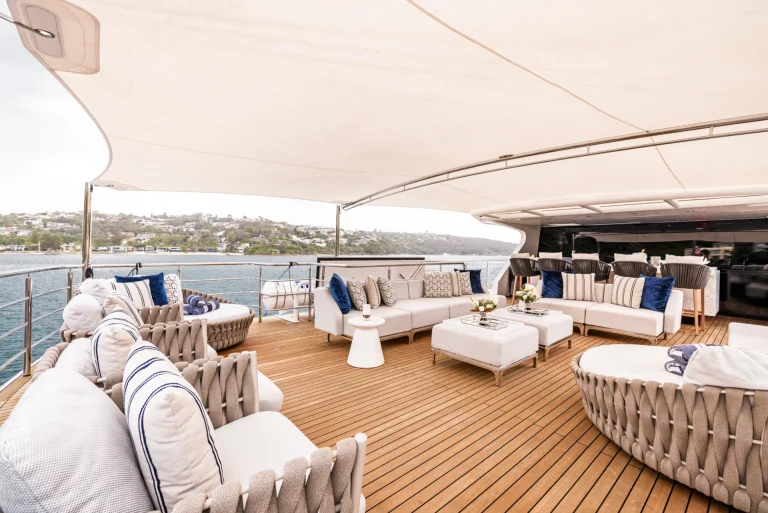
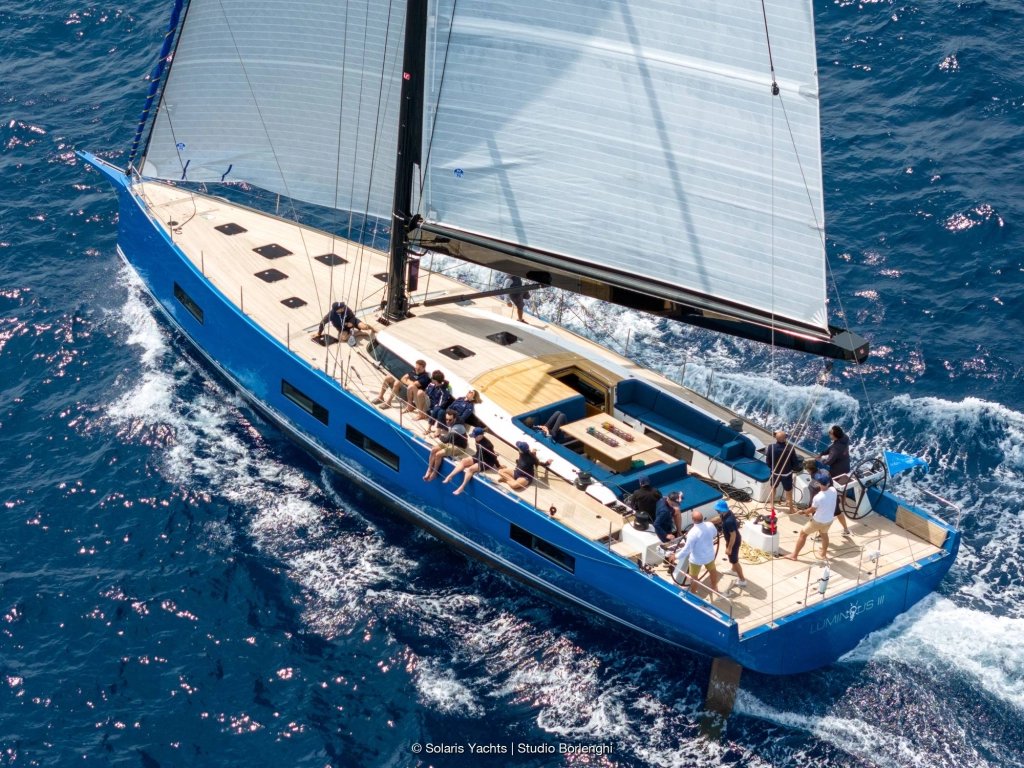
On Eos II, the deck is a study in restraint: clean lines, flush hatches, hidden winches. The sails unfurl with the push of a button, but the grace remains entirely human.
“Modern luxury is seamlessness,” says stylist Andrea Fabbri, who works with both Huisman and Baltic Yachts. “The more complex the systems, the simpler the feeling should be. It’s about purity — not display.”
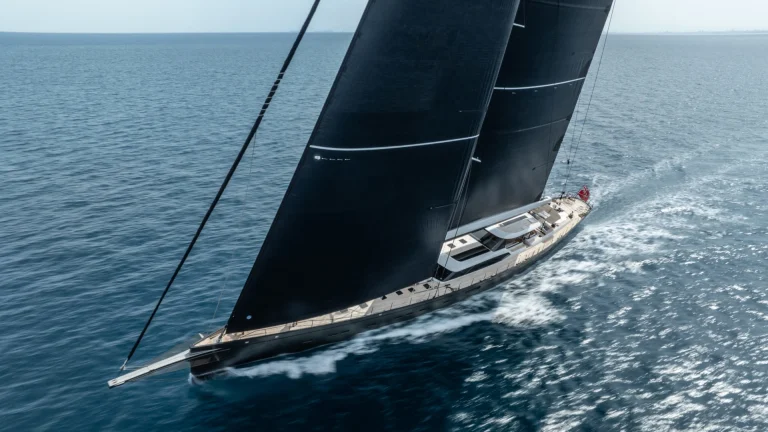
When the yacht heels, water streaming along her hull, guests often stand silent. Even in an age of satellites, the sight of a sail against the sky still stirs something ancient.
Sailing into the Future
Tomorrow’s yachts may blend wind with renewable power — wing sails paired with solar, autonomous trim systems guided by AI.
But for all the innovation, the essence will remain: that fragile pact between human and horizon.
Designer Dijkstra says it best: “Every advancement brings us closer to the wind, not further from it. We’re learning to listen again — just with better tools.”
As the sun sets over the build hall, light spills across the half-finished hull, painting the carbon in gold. Somewhere, a draught passes through the open doors and rustles the blueprints on the table — a small reminder from the element they serve.
The architects pause, smiling. The wind has spoken.