By Olivia Laurent
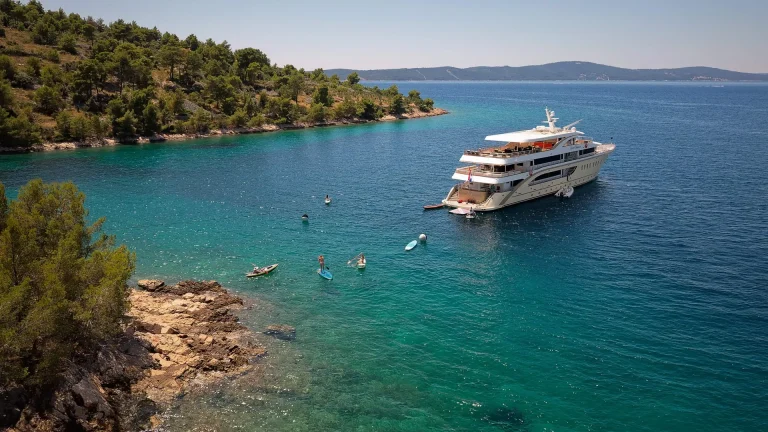
Dawn finds the galley already awake. The yacht’s hull sighs against the tide; a knife flashes once, twice, through a mango. The first espresso steams in the warmth of a rolling sea. Onboard the 60-metre Aurora, Chef Renato di Palma begins another day of composing flavour on a moving stage.
The Floating Kitchen
The galley is no bigger than a city apartment’s kitchen, yet it feels like the centre of the universe. Copper pans sway with the swell; spices jostle in drawers that click shut like clockwork. Everything here has been engineered for motion — magnetic knife blocks, gimballed burners, non-slip soles on the chef’s shoes.
“On land, the kitchen listens to you,” di Palma says, balancing a saucepan as the yacht dips gently. “At sea, you listen to it.”
His team of three works in rhythm: sous-chef Lila prepping scallops, pastry chef Tom rolling pâte sucrée, the steward appearing with a list of dietary notes. The smell is intoxicating — citrus zest, warm brioche, salt.
Menus of the World
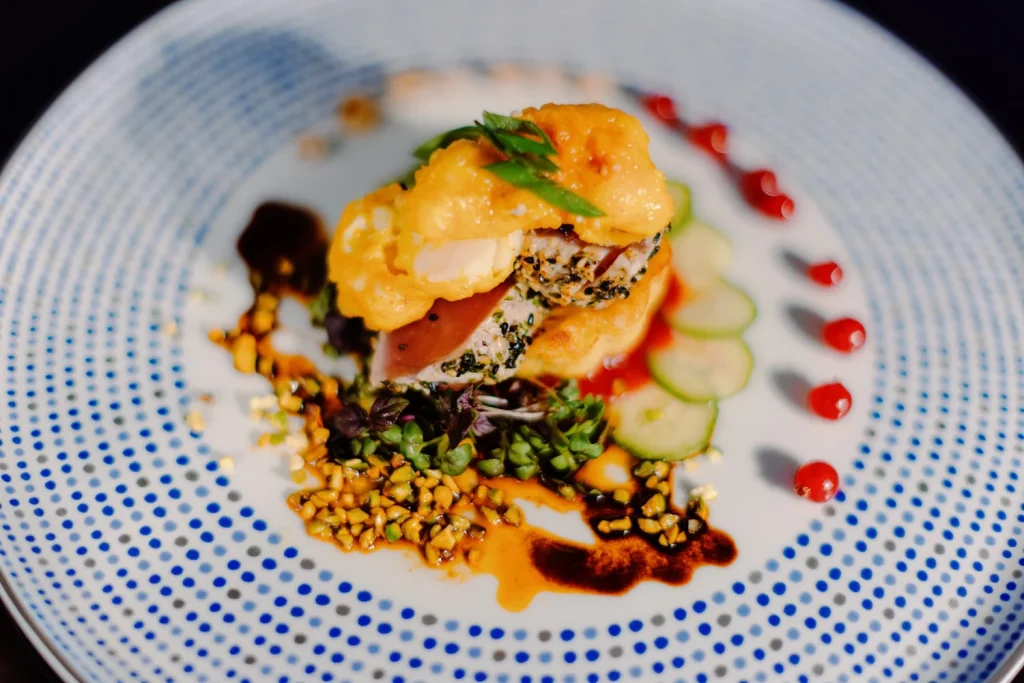
Every charter writes its own menu. For a family crossing the Cyclades, di Palma built a “Greek light” tasting: vine-leaf parcels, saffron-infused fish broth, pistachio gelato topped with honey from Paros. In the Caribbean, it was barefoot gastronomy — grilled lobster on the beach, rum-glazed pineapple, a fire crackling in the surf.
He calls his approach “geographical cuisine.”
“You can’t serve the same dish twice,” he says. “The sea changes the appetite, the weather changes the seasoning. Every meal should taste of where we are.”
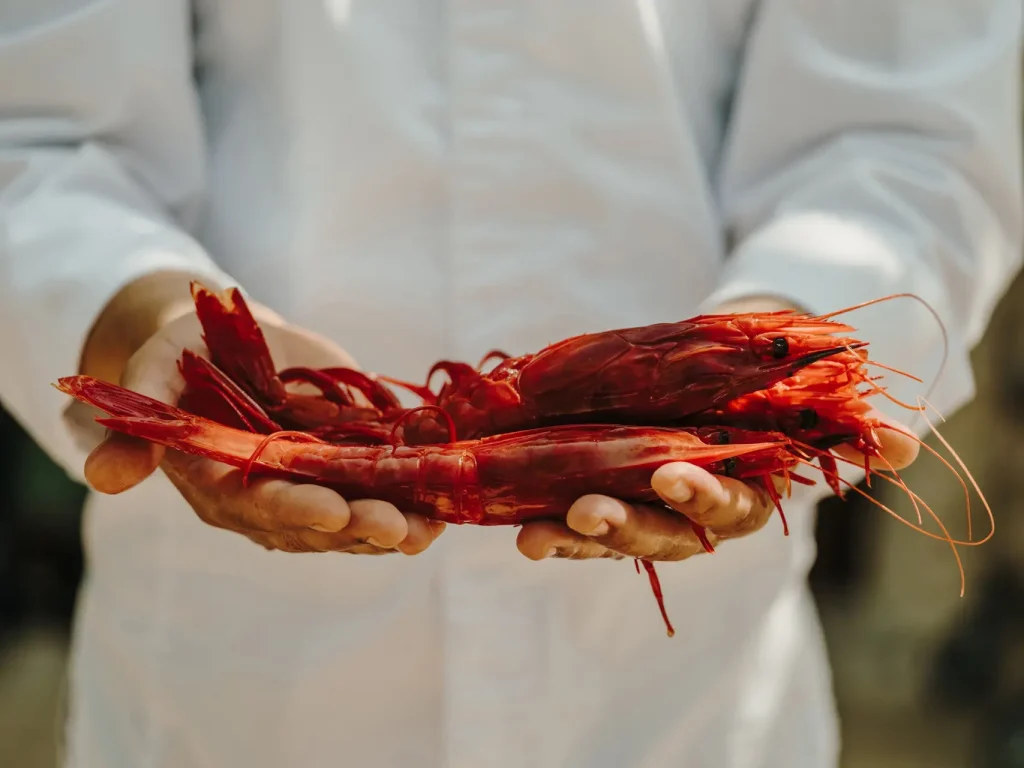
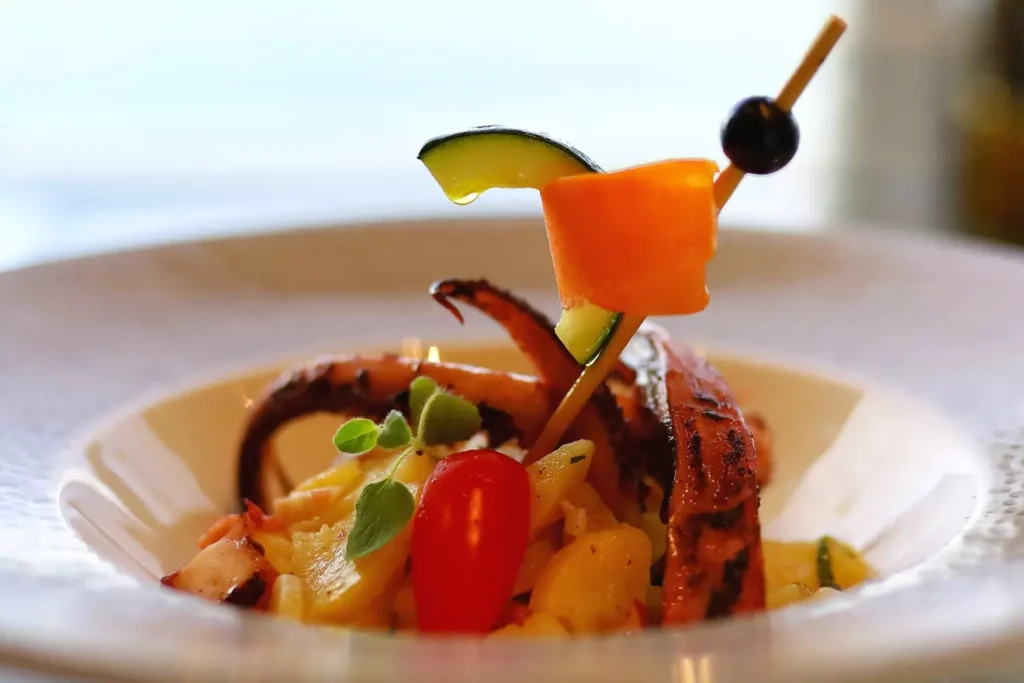
Supplies arrive in unpredictable fashion — sometimes by tender, sometimes in a fisherman’s hands at dawn. In Sicily, he trades champagne for sea urchins; in Norway, he barters coffee for reindeer moss. “The logistics are wild,” he laughs, “but that’s the adventure.”
Precision and Poetry
Cooking afloat means thinking in three dimensions. Heat rises differently, humidity blurs sugar work, and the ship’s angle can tilt a sauce into disaster. Yet di Palma seems to dance through it. He holds the spoon like a violinist bow, tasting, adjusting, listening.
His signature dish — a single scallop seared in olive oil from his grandmother’s grove, resting on cauliflower purée and caviar pearls — has followed him across four oceans. “It’s the sea distilled,” he says. “You taste the depth, the silence.”
Luxury, in his philosophy, is not excess but clarity. “One perfect thing, perfectly done.”
The Human Element
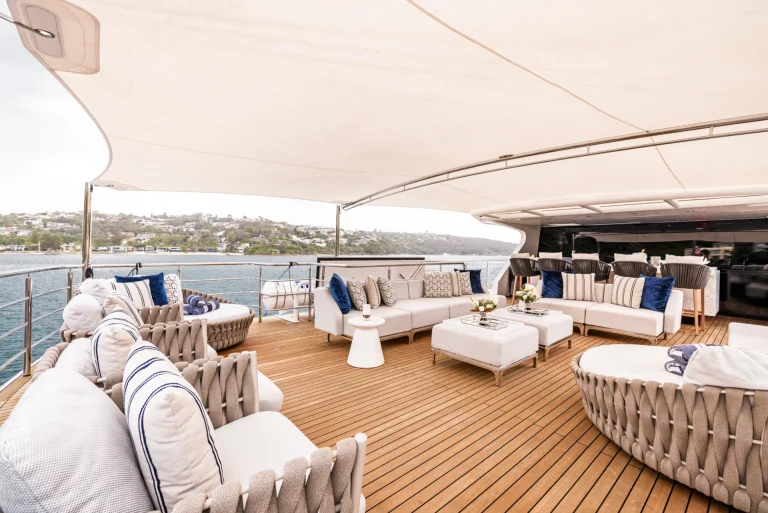
Above deck, guests sip cocktails under a sky turning coral. Below, the galley pulses with quiet intensity. The radio hums; Lila hums back. The captain sticks his head through the hatch, half-teasing: “Dinner ready for the stars?”
Di Palma grins. “They’re already shining.”
Service begins — ten plates glide upward through the lift, silver and porcelain meeting candlelight. The chef remains below, eyes closed, listening to the muffled sounds of delight returning from the deck.
“You never see their faces,” he says, “but you feel when they’re happy. It moves through the hull like music.”
A Life Between Ports
Most chefs measure careers in restaurants; di Palma measures his in latitudes.
He has cooked beneath the aurora in Lofoten, in turquoise lagoons off Tahiti, in harbours so small the yacht had to anchor a mile offshore. “Every port teaches humility,” he says. “You realise the world’s ingredients are infinite.”
When asked if he misses life ashore, he shakes his head. “On land, the view never changes. Here, the horizon is a new menu every day.”
The Night Watch
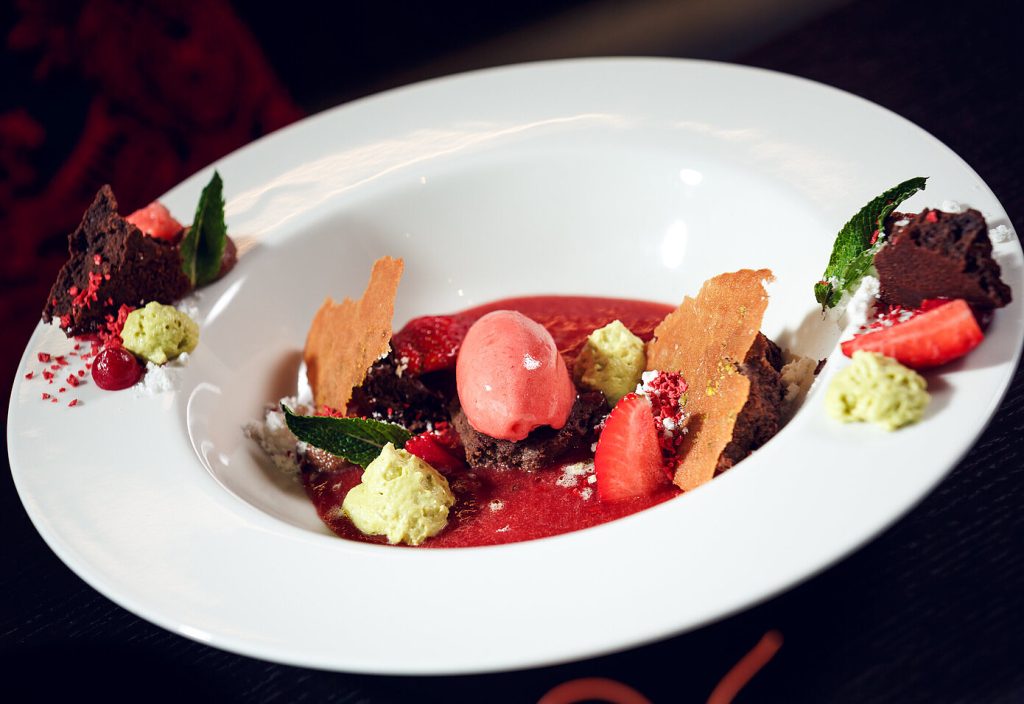
After the final course — chocolate mousse perfumed with tonka bean — the galley exhales. The hum fades to the low heartbeat of generators. Di Palma steps outside, barefoot, to breathe. The sea is glassy, the moon enormous. Somewhere inside the yacht, laughter drifts like music through the vents.
He wipes his hands on his apron and looks toward the horizon. “Tomorrow,” he says softly, “we’ll find something new to cook.”
A wave laps the stern, gentle as applause.