By Clara Mendez
At first light the shipyard breathes like a living thing.
The air smells of salt and varnish; sawdust floats in the beams that filter through the rafters. Beneath a half-built hull, sparks flare from a welder’s torch and fade into the grey Dutch dawn.
Here, among cranes and scaffolds, modern alchemists turn steel and teak into grace.
Where Perfection Is a Daily Ritual
At Feadship’s Royal Van Lent yard in the Netherlands, hundreds of craftspeople move in quiet synchrony. Welders trace silver seams, carpenters sand teak until it gleams like honey, engineers bend over blueprints alive with possibility.
“You can measure everything,” says Armin Decker, a master builder with three decades in his hands, “but you can’t measure feel. The sea decides if your line is right.”
When a new 90-metre hull slides from its cradle into the canal, it carries the fingerprints of more than 200 artisans. Every join, every weld, every polish reflects a devotion invisible to the casual eye — the patience that separates construction from creation.
Old Souls, New Tools
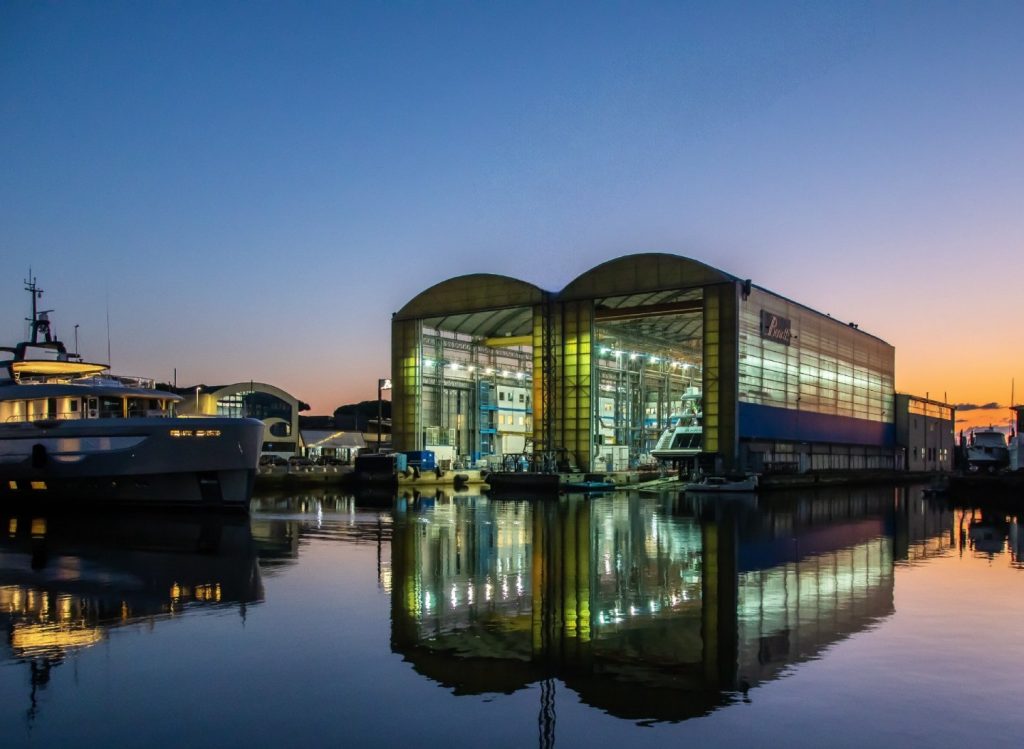
Across the continent, at Benetti in Viareggio, Italy, the air hums with another kind of rhythm. Espresso mingles with the scent of resin; the yard floor glows with Mediterranean light. Digital monitors flicker with 3-D schematics while, a few steps away, an older man checks a curve by touch alone.
“Technology gives precision,” smiles yard supervisor Carlo Fontana, “but instinct gives beauty.”
He nods toward a team fitting marble into a bathroom bulkhead. “We still talk about proportion and emotion — not just numbers. The boat must feel Italian before it leaves.”
In these workshops, craft is conversation. Robots cut, humans refine, and somewhere between them lives the soul of the vessel.
Heritage That Floats Forward
From the teak schooners of the Nicholsons’ era to the carbon composites of today, yachtbuilding has always balanced tradition and invention.
When Desmond Nicholson and his father refitted Mollihawk in the 1940s, they worked by instinct and eye; their tools were planes and chisels, not plasma cutters.
Yet the principle remains identical: patience, precision, respect for the sea.
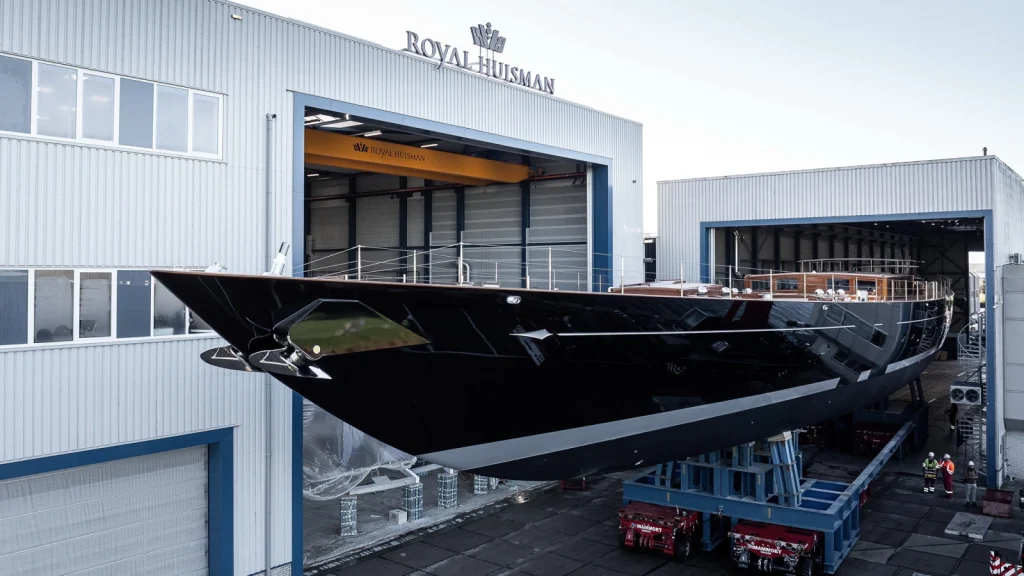
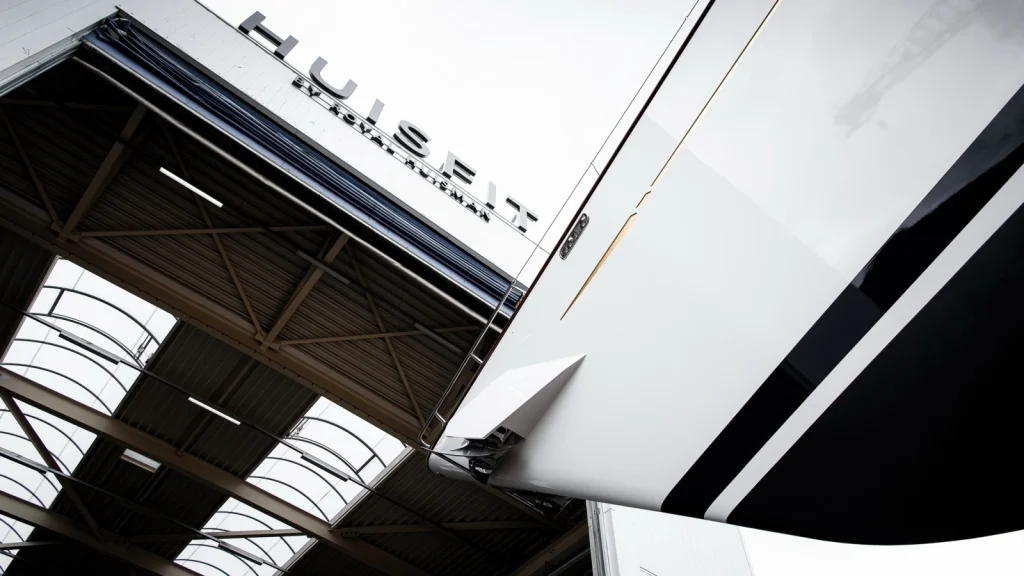
At Royal Huisman in Vollenhove, that lineage endures. Apprentices learn to fair a hull by hand before touching a machine. “You must know what perfect feels like before software can help you find it,” says joiner Pieter Vos. “Otherwise, the computer only builds emptiness.”
Every plank, every weld, is a handshake across generations — between Nicholson’s wooden schooner and Huisman’s sleek aluminum dream.
A Launch, and a Letting Go
Launch day is the builder’s ceremony of release. The yard stills; voices drop. Champagne glints against steel as the vessel begins to move, slow and stately, toward the water.
For months — sometimes years — this has been their universe. Now the hull kisses the tide and becomes what it was always meant to be: alive.
Decker watches from the quay, hands in his pockets. “We build her,” he murmurs, “but she belongs to the sea.”
The crowd applauds, the ropes are cast off, and the reflection ripples outward — a mirror of light, craftsmanship, and pride.
Why Craft Endures
In a world of automation, the shipyard remains definitely human.
Perfection here isn’t speed; it’s stillness — the deliberate care that allows something lasting to emerge from the noise of modernity.
“Luxury isn’t abundance,” Fontana says, watching the workers tidy their benches. “It’s time. It’s the space to do things properly.”
That philosophy echoes the earliest charters in English Harbour, when a family with a schooner built something greater than a livelihood: a legacy of excellence. Today’s superyachts, with their glass hulls and hybrid drives, are the natural heirs of that tradition. They are proof that progress need not abandon poetry.
And so, as dusk settles over the yards of Holland and Italy, the sea waits — silent, patient, eternal — for the next masterpiece to glide into its embrace.