By Elise North
At first the sea is still.
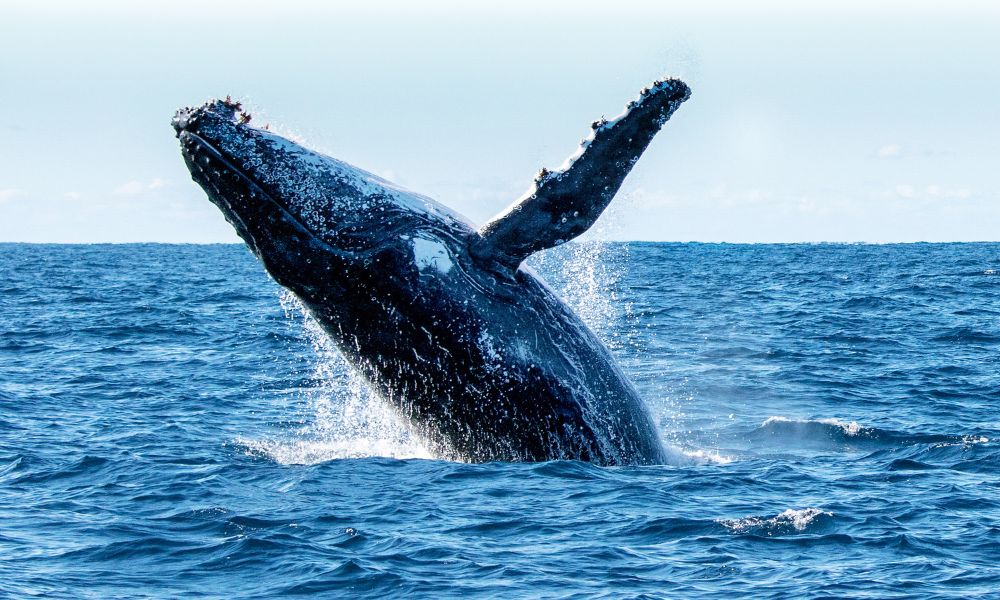
The sky blushes pale gold over a mirror of water, and then—suddenly—a plume erupts beside the bow. A humpback whale, immense and silent, breaches into the morning. For an instant its eye meets yours, a dark mirror of curiosity, before the body crashes back into foam. The sound is felt more than heard: a heartbeat the size of an ocean.
Moments like this cannot be scheduled. They belong to the sea.
The Language of the Wild
Every captain keeps a secret ledger—entries written not in ink but in memory.
For Captain Jean Morel, who has spent thirty years crossing the globe, the ocean’s stories live between coordinates.
“People think we choose the course,” he says. “But sometimes the sea writes the itinerary.”
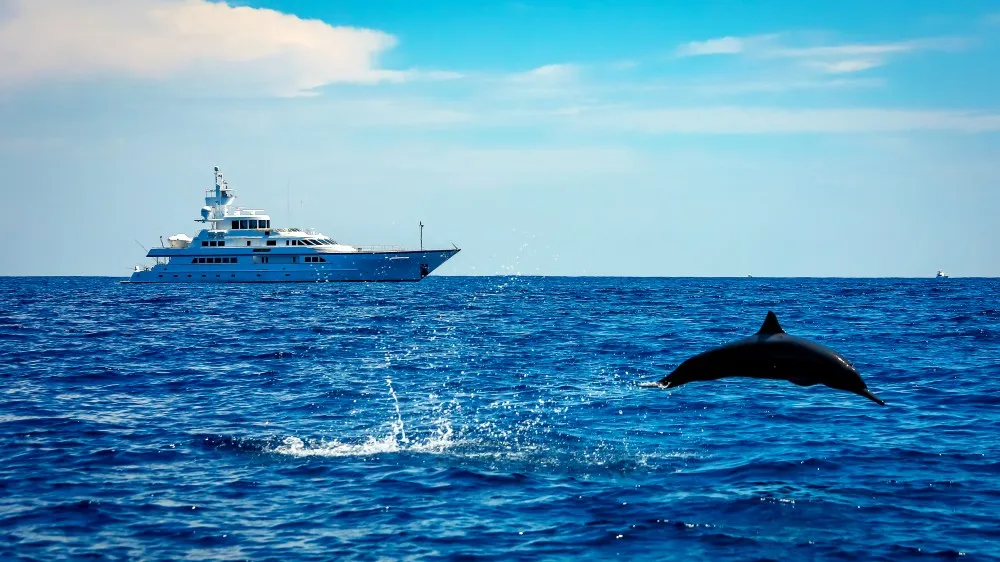
In Tonga, he once watched a pod of whales circle the yacht for hours, surfacing in a slow spiral. In the Galápagos, dolphins raced the bow at dawn, weaving through turquoise light. In Norway, bioluminescent plankton turned the wake into a comet trail.
“It’s like the planet speaking in flashes,” he says. “You realise how alive it all is.”
These encounters blur the line between science and spirituality. The guests grow quiet, cameras forgotten, eyes wide. The crew move softly, reverently. For a few minutes everyone aboard is simply human—small, astonished, awake.
Beneath the Surface
The magic doesn’t end at the waterline.
On a recent expedition in Raja Ampat, marine biologist Dr Sofia Renner joined a charter to document coral restoration sites. She remembers descending through layers of light until the reef appeared below—purple fans, orange sponges, clouds of tiny fish.
“The sea there hums,” she says. “You feel it in your bones.”
Her team planted fragments of staghorn coral onto new structures designed by a Feadship engineer volunteering on his holiday. Within months, the reef had begun to heal. “We talk about luxury,” Renner says, “but this—being part of something that endures—is the greatest privilege.”
The Edge of Discovery
Far from the calm of tropical shallows, another yacht—the expedition vessel Endeavour—navigates the Drake Passage. Icebergs drift like cathedrals; the sea hisses against their blue walls.
Onboard, photographer Luc Armand waits with gloved hands on his camera. “You learn patience out here,” he says. “The light changes every second. Sometimes you wait twelve hours for one frame—and then it appears.”
He shows an image: an orca slicing through mirrored water, the yacht’s reflection captured in its flank. “That shot cost three years of waiting,” he laughs. “But it’s worth every cold finger.”
For the guests, the experience is transformative. They are no longer spectators of nature—they are participants in its theatre.
When the Sea Turns Wild
Not all encounters are gentle.
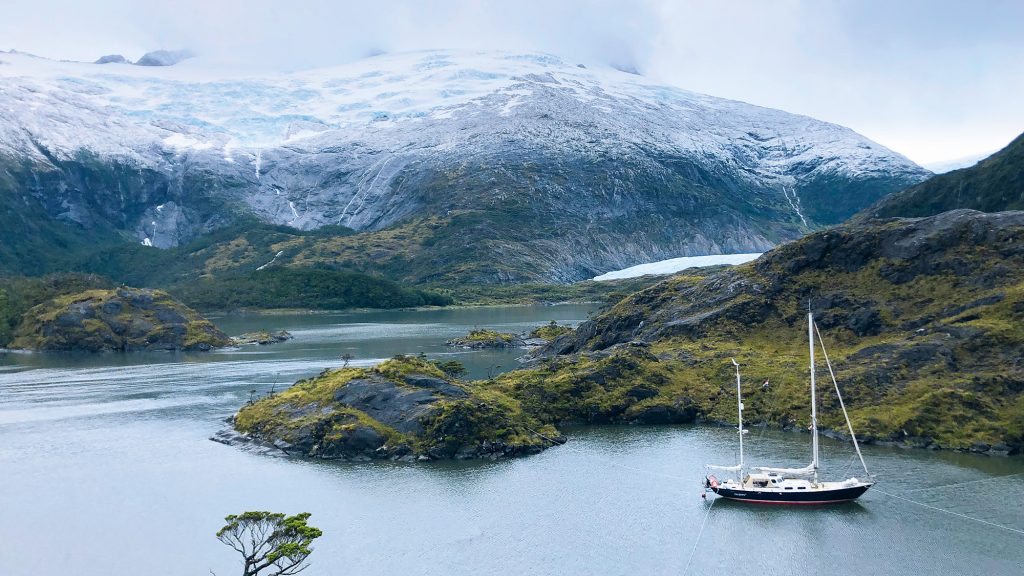
Off the coast of Patagonia, Endeavour once faced winds that ripped across the fjords at 70 knots. Waves climbed mountains high; the yacht groaned like a living thing. Yet within that chaos came a kind of calm.
“You feel the planet’s power,” says Armand. “It humbles you. Every storm is a reminder that the sea allows us passage—it never grants possession.”
When the wind finally eased, a rainbow arched over the glacier’s edge. The crew stood silently on deck, hair whipped by spray. No one spoke. No one needed to.
The Ocean’s Memory
Every ocean holds ghosts: sunken hulls, migrating giants, the sound of wind across centuries.
For sailors like Morel, these memories are companions. He points to the horizon. “You see that line? Everything beyond it has a story.”
He recalls a night in the Sargasso Sea when the water shimmered with plankton so bright it cast shadows on the deck. “We turned off every light,” he says. “The yacht became invisible, floating in liquid stars. It felt like sailing inside the universe itself.”
Such experiences defy language, yet they define why people return to the sea: not for conquest, but for communion.
A Quiet Realisation
At sunset the ocean softens again. Guests gather on the aft deck; glasses catch the last fire of the day. The chef appears with canapés; someone plays a soft jazz riff.
And then a cry—“Look!”—as a manta ray leaps clear of the surface, wings outstretched like an ancient emblem.
For a breathless moment, time holds still.
When it’s gone, the conversation resumes, laughter rising with the breeze. But something lingers in the quiet between words—a recognition that luxury isn’t only in marble bathrooms or polished decks. It’s in these fleeting miracles, granted freely by the world beyond our control.