Buying a yacht is the easy part to price. Owning one is where the real planning starts.
Annual running costs vary wildly because two boats of the same length can live completely different lives: one might sit in a quiet marina and do a handful of coastal weekends; another might spend a season chasing good weather, running generators, carrying guests, and clocking serious engine hours. The trick is to budget for how you will actually use the yacht, not how you imagine you might use it one day.
What follows are realistic annual budget bands by size, with notes on what pushes numbers up or pulls them down. Figures are shown in US dollars to match common industry benchmarks; your local costs will move with labour rates, berth availability, fuel pricing, and insurance markets.
The rule of thumb that gets you in the right postcode
A widely used starting point is that annual operating costs often land around 10 to 15 percent of the yacht’s purchase price. That is not a law of nature, and it is not evenly distributed across the fleet. A new yacht can cost more than this in the early years once you include depreciation and the “new boat penalty” on value. A well bought older yacht may sit below it for a time, then spike when big-ticket items come due.
Think of the percentage as a sense-check, not a quote.
Where it helps most is when people under-budget for the jump from “owner-run” to “crew-assisted”. Around the 45 to 70 ft range, the boat can still feel manageable, then the practicalities of cleaning, systems checks, lines, fenders, maintenance scheduling and watchkeeping begin to demand professional help, especially if you want to use the yacht often.
Realistic annual budgets by yacht size (cash operating costs)
The table below focuses on typical annual cash outlay: berth or storage, insurance, routine servicing, consumables, and a sensible allowance for repairs. Depreciation is discussed later because it is real cost, just not a cash bill.
| Size band | Typical use pattern | Motor yacht annual budget | Sailing yacht annual budget | What usually changes the band |
|---|---|---|---|---|
| Small (under 30 ft) | Owner-operated, weekends, short trips | $10k to $35k | $5k to $25k | Marina choice, winter storage, age and condition |
| Medium (30 to 60 ft) | Regular cruising, more systems aboard | $50k to $150k+ | $10k to $60k | Crew support, generator hours, refit schedule |
| Large (over 60 ft) | Professional operation becomes normal | $150k to $500k+ | $80k to $250k+ | Full-time crew, dockage access, heavy maintenance cycles |
These bands are deliberately broad. A 60 ft motor yacht is often cited around $100k to $150k per year in many owner-use scenarios, yet the same length can move sharply higher if it carries full-time crew, runs long distances at speed, or is kept in premium berths year-round.
Small yachts (under 30 ft): manageable, but not “cheap”
Small yachts can be surprisingly cost-effective if you keep expectations realistic. They are often owner-maintained to a degree, can fit into more marinas, and parts tend to be simpler. The downside is that small boats do not forgive neglect. A modest annual spend is still needed to keep engines, electrics and safety gear dependable.
A typical annual cost shape for a 25 to 30 ft motor cruiser might include berth fees, insurance, lift-outs, antifouling, engine service, and a fuel budget that depends on how often you run at planing speed. Sailing yachts of the same length normally spend less on fuel, yet still face standing rigging inspections, sail repairs, winch servicing, and the same marina realities.
If you are comparing new vs used at this size, the yearly cash cost may look similar, while the “real” cost differs because new boats usually drop in value faster in the first year or two.
Medium yachts (30 to 60 ft): where budgets start to surprise
This is the band where comfort, range and capability come into their own. It is also where costs begin to rise faster than length. You tend to add:
- more complex electrics and electronics
- larger engines, often twin installations
- generator, air conditioning, watermakers, stabilisation or more elaborate hydraulics
- bigger canvas work, bigger safety kit, bigger spares
A 40 to 50 ft motor yacht frequently lands in the $50k to $100k+ annual range once you include berth, insurance, scheduled servicing and a realistic repairs allowance. Step towards 60 ft and six figures becomes normal for many owners, even before you start “doing it properly” with professional detailing, proactive replacement of ageing components, and higher cruising hours.
Sailing yachts remain cheaper to feed with fuel, but they are not immune to rising cost. Sails, rigging, deck hardware and paintwork still scale up, and quality labour is quality labour whether the job is on a motor yacht or a sailing yacht.
Large yachts (over 60 ft): crew and complexity take over
Above 60 ft, the yacht itself starts to dictate the ownership style. Even if the owner enjoys hands-on boating, there are more daily checks, more safety considerations, and more consequences when something fails. Many owners move to a managed setup with a captain or engineer, even if only part-time or seasonal.
On a 60 to 70 ft motor yacht, an annual cash budget around $150k to $300k is common in many private-use patterns, then $500k+ appears quickly with full-time crew, premium dockage and heavier cruising schedules. Once you enter the 100 ft-plus world, seven-figure annual budgets are not unusual.
Sailing yachts at this size can reduce fuel cost compared with power, yet they carry their own high-value maintenance items. Rigging programmes, sail inventories, deck gear and specialist labour keep the baseline high.
What actually makes one yacht cost double another
Two owners can buy similar yachts and report totally different annual spend. The difference is usually not one dramatic line item. It is lots of smaller choices that stack up.
Here are the cost drivers that most often move the needle:
- Home berth and seasonality: a premium marina, a hard-to-get slip, or year-round berthing can dominate the “fixed” budget.
- How hard you run the boat: high speed cruising burns fuel fast and accelerates wear on engines, shafts, props and stabilisation.
- Condition and maintenance philosophy: reactive repair is often cheaper this year and more expensive next year.
- Crew model: even a part-time captain changes your cost base, and full-time crew changes everything.
- Equipment level: air conditioning, watermakers, stabilisers, complex entertainment systems and multiple tenders all bring servicing, spares and specialist support.
A practical way to think about it is to group costs into “must pay” and “choose to pay”.
Fixed costs vs cruising costs (and why it matters)
Fixed costs are the bills that turn up whether you leave the dock or not. Marina contracts, insurance, planned servicing, safety checks, registrations, storage, and the annual lift-out belong here. Many first-time owners underestimate how large this pile is because it does not feel connected to the fun part.
Cruising costs rise with miles and hours. Fuel is the headline, yet not the only one. You add wear-based servicing, pump-outs, extra cleaning, guest consumables, unexpected marina nights, and the simple fact that things break when you use them.
If you plan to cruise for a full season, budget for both piles. A yacht that “only needs $X per year” in a dockside life can need meaningfully more once it is worked as intended.
A simple ownership-cost template you can copy
Start with your yacht size and type, then build the budget line by line. If you are working with a broker or management team, ask for a sample operating budget for a comparable yacht, then adjust for your plans.
Most annual budgets include:
- Berthing or storage
- Insurance
- Scheduled servicing
- Maintenance and repairs allowance
- Fuel and consumables
- Cleaning and detailing
- Safety equipment servicing
- Communications and onboard subscriptions
- Professional support, if any
When you estimate each line, use ranges and keep a contingency. Boats have a habit of turning a “maybe later” job into a “now” job.
Typical annual cost breakdown (what each line really covers)
A good budget is specific about what is inside each bucket, so you do not count items twice or forget them entirely. The headings below are common, yet each hides details.
After you have a first draft, sanity-check it against these definitions:
- Maintenance and repairs: routine engine servicing, antifouling, anodes, polishing, small parts, troubleshooting, call-outs.
- Dockage and storage: berth contracts, shore power, water, yard periods, lift-outs, winterisation where relevant.
- Insurance: hull and machinery, liability, tender cover, navigational limits, higher rates in storm-prone regions.
- Fuel and engine hours: propulsion, generator, heating, dinghy outboard, plus oil and filters tied to hour-based service intervals.
- Crew and professional help: captain, engineer, stewarding, daywork, payroll costs, travel, training, uniforms.
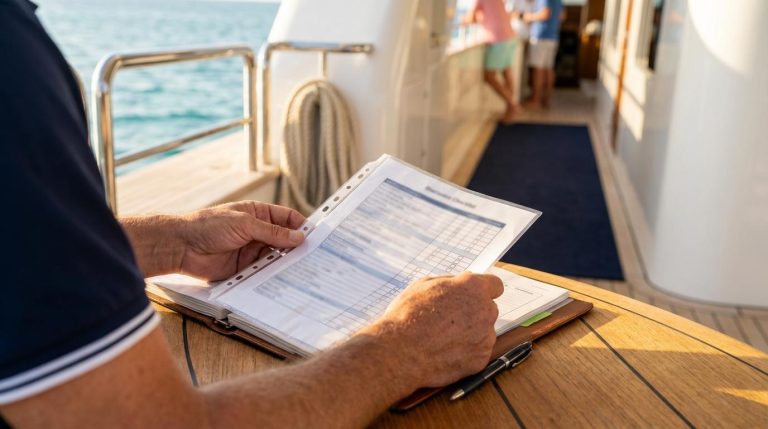
- Compliance and safety: life raft servicing, fire suppression checks, EPIRB, flares, surveys where required.
Those labels look tidy, yet a single yard period can touch several buckets at once. Clarity upfront prevents the “how did we spend that much?” moment in month nine.
Depreciation: the cost you feel later
Depreciation is not a bill you pay to a supplier, but it is still part of what ownership costs. New yachts often lose value faster at the beginning, then the curve tends to flatten. A used yacht may feel financially calmer in the first years because someone else absorbed that early drop, even if you spend more on upkeep.
It also helps to plan for refit cycles. Electronics, batteries, upholstery, teak repairs, standing rigging on sailing yachts, major engine work, and paint are not annual events, but they arrive on a schedule. Owners who budget only for the “normal year” can get caught out when a heavy year lands.
Tax, VAT, and where the yacht is kept
Purchase taxes and import duties are highly location-dependent, and they can be among the biggest costs associated with ownership. They may be one-time, they may be triggered by moving the yacht, and they may change with usage (private use vs charter).
Even if you prefer not to get lost in technicalities, it pays to ask early what happens if you base the yacht in one region, cruise to another, then decide to sell. Advice should come from qualified professionals, yet the prompt to ask the question is part of good budgeting.
Ownership choices that can reduce the annual hit
There are ways to keep the experience while softening the annual spend, though each comes with trade-offs.
Most owners who manage costs well do a few simple things:
- buy the right size for how often they will use it
- choose a berth strategy before choosing a yacht
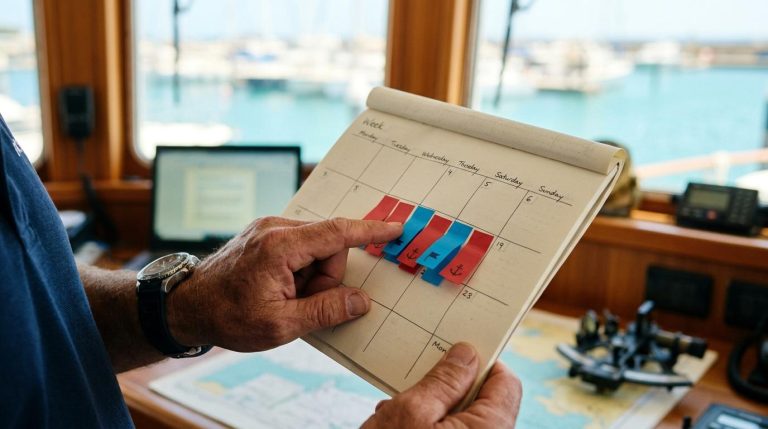
- keep a planned maintenance calendar
- avoid running at maximum speed as the default
- invest in surveys and condition checks before purchase
A management programme can also make costs more predictable by turning reactive spending into scheduled work, even though the total is still driven by yacht size, complexity and use.
If you want a budget that is tight enough to rely on, start with your intended cruising area, your expected weeks aboard, and whether you want owner-operated simplicity or crew-supported convenience. From there, the right annual number usually becomes obvious long before you sign anything.